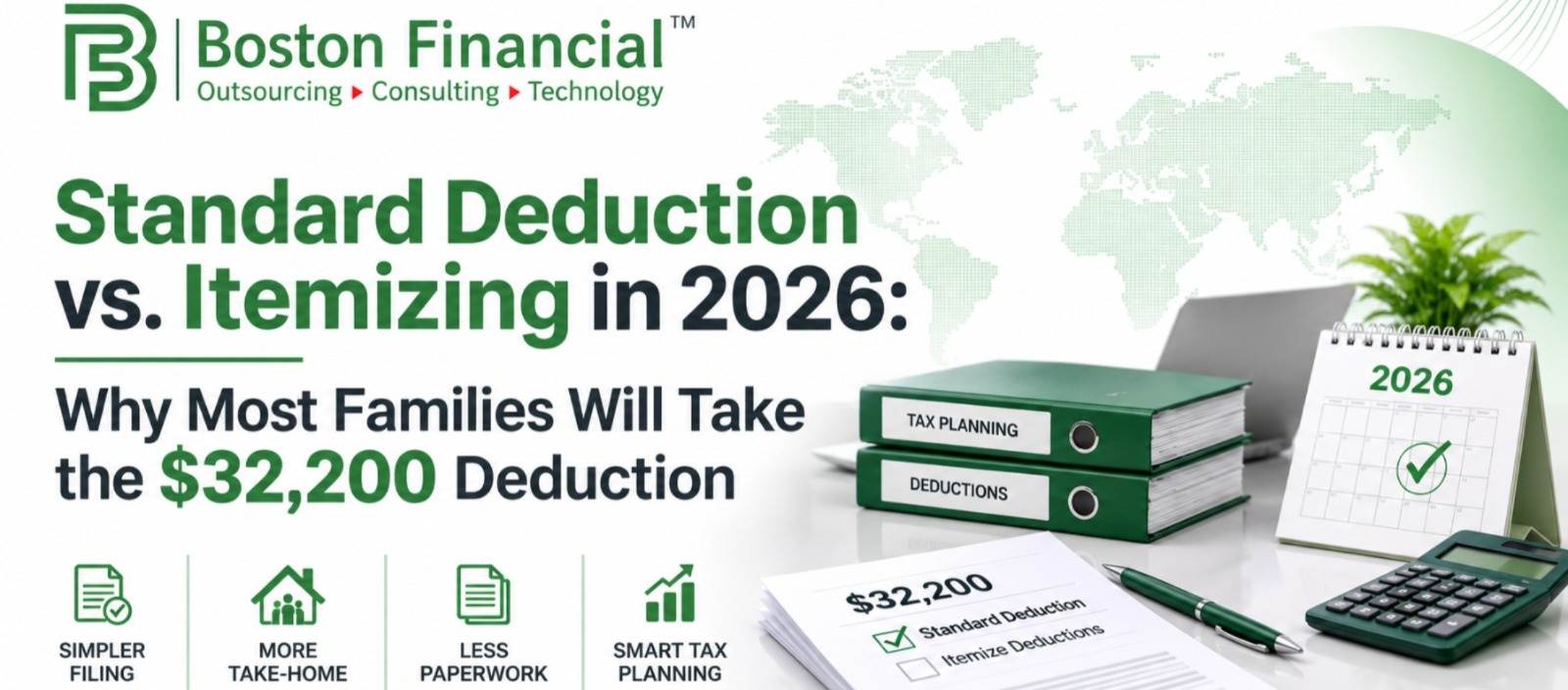
As taxpayers look ahead to the upcoming tax year, choosing between claiming the standard deduction or itemizing expenses remains one of the most critical decisions in personal wealth management. With inflation adjustments expanding standard deductions to new highs, the barrier to itemizing has risen significantly. For the 2026 tax year, the baseline standard deduction climbs to $32,200 for married couples filing jointly, $16,100 for single filers and married individuals filing separately, and $24,150 for heads of household.
Understanding these thresholds is essential for every household preparing for annual income tax filing, as taking the right approach can prevent thousands of dollars from being unnecessarily paid to the IRS.
To benefit from itemizing deductions on Schedule A, your aggregate eligible expenses must exceed your statutory standard deduction. For a married couple, this means finding more than $32,200 in qualifying write-offs before itemizing yields a single dollar of additional tax advantage.
The primary components of itemized deductions mortgage interest, state and local taxes (SALT), and charitable donations are often constrained:
Mortgage interest deductions are limited to acquisition debt up to $750,000 for primary and secondary residences.
State and local tax deductions face statutory caps that limit the write-off for state income, sales, and local property taxes.
Out-of-pocket medical expenses only count to the extent they exceed 7.5% of your adjusted gross income (AGI).
When running a comprehensive financial statement analysis on family cash flows, wealth planners frequently find that typical middle-to-upper-middle-class households simply do not generate enough combined qualifying expenses to beat the elevated $32,200 joint baseline. As a result, the vast majority of filers will maximize their savings by taking the standard deduction.
For filers whose annual itemized expenses hover just below the statutory threshold such as a couple with $28,000 in mortgage interest and property taxes, proactive planning can unlock significant tax relief. Consulting with an experienced tax financial advisor allows households to implement multi-year grouping strategies, such as "charitable bunching."
Rather than donating $10,000 each year to charity, a taxpayer can bundle two or three years of planned contributions into a single tax year using a Donor-Advised Fund (DAF). In the contribution year, total deductions surge well above $32,200, allowing the family to claim a substantial itemized deduction. In alternate years, the household simply reverts to taking the full $32,200 standard deduction while distributing grants to their chosen charities from the fund.
Deduction planning should not happen in isolation. Managing individual tax liabilities effectively requires evaluating how standard deductions interact with retirement contributions, Health Savings Accounts (HSAs), and above-the-line adjustments to gross income. Furthermore, taxpayers must verify state-level conformity; certain states mandate that taxpayers claim the standard deduction on their state return if they elect it on their federal return, potentially altering the optimal state-and-federal combined outcome.
By modeling your deductions before December 31, you can determine whether an accelerated mortgage payment, property tax prepayment, or charitable contribution makes strategic sense, ensuring your household enters the tax season with a clear, maximized filing strategy.
